
10 Best Transit Levels and Builder’s Levels (2026)
As an Amazon Associate, Engineer Warehouse earns from qualifying purchases. That does not change what you pay. Last updated on November 17, 2026
An optical level is still the most dependable way to set grades, check foundation forms, level footings and transfer elevations around a site. It needs no batteries, works in full sun where a laser is hard to see, and a decent one lasts for decades.
Three kinds are sold under the “transit level” name. A builder’s level turns only horizontally. An automatic level is a builder’s level with a compensator that keeps the line of sight level once the instrument is roughly set up, which makes it faster and more forgiving. A true level-transit also lets the telescope tilt up and down, so you can plumb walls, line up stakes and read vertical angles. We cover all three below and say which is which.
Best all-round kit for contractors
- 20X magnification builder’s level
- Comes with a tripod and grade rod
- Over a thousand Amazon reviews
Best automatic level kit
- 32X magnification automatic level
- Compensator keeps the sight line level once set up
- Supplied as a kit for site use
Best automatic level from a survey brand
- 24X magnification automatic level
- From Topcon, a long-established survey instrument maker
- Instrument only; add your own tripod and rod
Best level-transit kit for the money
- 20X magnification, 200-foot range
- Telescope tilts ±45° for transit work
- Package includes accessories to start working
Best traditional level-transit
- 22X magnification
- Level-transit with vertical telescope movement
- Long-running model with hundreds of reviews
Best complete automatic level kit
- 24X automatic level
- Kit includes tripod, rod and carrying case
- From a long-standing professional instrument brand
Best upgrade if you already own a tripod and rod
- 32X magnification automatic level
- Same instrument as the GOL32CK kit
- No tripod or rod included
Best 32X automatic kit from a traditional brand
- 32X magnification
- Magnetically damped compensator with transport lock
- ±3/32 inch at 100 ft
Best budget kit with tripod
- 32X automatic level
- Self-leveling magnetic-dampened compensator
- Tripod included; transport lock
Best tripod and rod set for an instrument-only level
- 62-inch aluminum survey tripod with 5/8-inch thread
- Grade rod included
- Dual leg locks
The best transit levels and builder’s levels, reviewed

Best all-round kit for contractors. Our rating: 5.0/5.0
The DW090PK is the kit we would hand to a contractor who needs to start setting grades this week. You get the level, a tripod and a grade rod in one box, and DEWALT’s 20X instrument is simple to set up and read.
It is a builder’s level, so the telescope turns horizontally only. For foundations, footings, slabs, fences, decks and drainage that is all you need. If you also want to plumb or read vertical angles, look at the level-transits further down.

Best automatic level kit. Our rating: 4.9/5.0
Bosch’s GOL32 is an automatic level, which means a built-in compensator corrects small setup errors for you. Once the bubble is roughly centered you can read the rod straight away, and you lose far less time re-leveling when someone bumps the tripod.
The 32X telescope reads a rod clearly at longer distances than a 20X builder’s level. This is the kit we would choose for anyone who levels regularly and wants professional-grade gear without stepping up to survey brands.
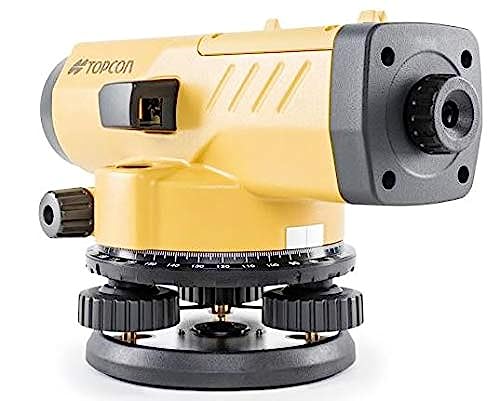
Best automatic level from a survey brand. Our rating: 4.8/5.0
Topcon’s AT-B series is a staple on survey and civil sites. The AT-B4A is the 24X model, which is plenty for typical building and grading work.
It is sold without a tripod or rod, so budget for those if you are starting from scratch. If you already own a flat-head tripod and a rod, it is one of the best-value instruments from a survey brand.
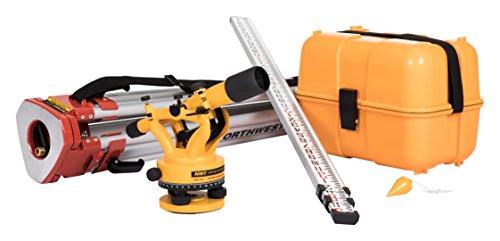
Best level-transit kit for the money. Our rating: 4.7/5.0
The NSLP500B is a true level-transit: as well as turning horizontally, the telescope tilts so you can plumb columns and walls, line up stakes and check vertical alignment.
NWI quotes 1/4-inch accuracy and a 200-foot working range. For a homeowner or small builder who wants transit capability without a big outlay, it is a sensible package.
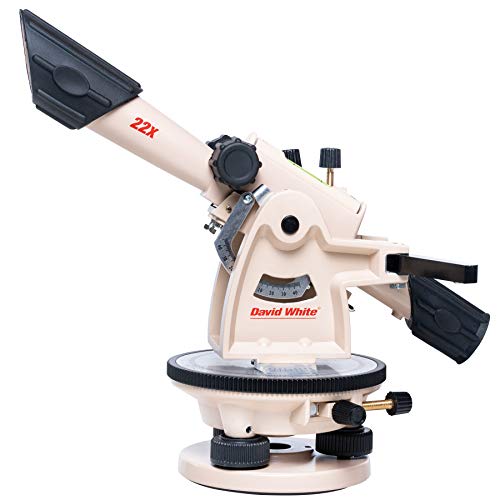
Best traditional level-transit. Our rating: 4.6/5.0
David White has made levels and transits for generations, and the LT6-900 Meridian is its long-running 22X level-transit. It is a good choice for contractors who want to read vertical angles and plumb as well as level.
Check the listing to see whether you are buying the instrument alone or a package with a tripod and rod.

Best complete automatic level kit. Our rating: 4.5/5.0
CST/berger’s SLVP24ND kit bundles a 24X automatic level with a tripod, rod and case, so it is ready to use out of the box. CST/berger has long been a familiar name on construction sites in North America.
It costs more than the DEWALT package but gives you an automatic instrument with a higher-power telescope.

Best upgrade if you already own a tripod and rod. Our rating: 4.4/5.0
If you already have a tripod and grade rod from an older level, buying the GOL32 on its own is the cheapest way to move up to an automatic 32X instrument.
Make sure your tripod has a standard 5/8-inch thread before you order.

Best 32X automatic kit from a traditional brand. Our rating: 4.3/5.0
David White’s AL8-32 is a 32-power automatic level with a wire-hung, magnetically damped compensator and a lock-out device that protects it in transport. Rated accuracy is ±3/32 inch at 100 feet, with a 400-foot working range.
It comes from the same maker as the LT6-900 above and suits crews that want an automatic level without stepping up to survey brands.

Best budget kit with tripod. Our rating: 4.2/5.0
This value kit pairs a 32X automatic level with a tripod, and it has hundreds of Amazon reviews. It suits DIY projects such as patios, fences, drainage and sheds.
Read the listing carefully to see what is included in the box, since contents vary between bundles.

Best tripod and rod set for an instrument-only level. Our rating: 4.1/5.0
If you buy one of the instrument-only levels above, you will need a tripod and rod. This set covers both and fits standard 5/8-inch-thread instruments.
For heavy daily use, a contractor-grade tripod from a survey brand will last longer, but this set is fine for most building work.
How to choose a transit level
Builder’s level, automatic level or level-transit?
If you only need to set and check heights, a builder’s level or an automatic level is all you need. Choose an automatic level if you level often: it is faster to set up and corrects small errors for you. Choose a level-transit if you also need to plumb walls and posts, line up points or measure vertical angles.
Magnification
20X is fine up to about 150 to 200 feet. 24X to 32X lets you read the rod clearly at longer distances and in poorer light.
Accuracy
Manufacturers quote accuracy in fractions of an inch over 100 feet or in millimeters per kilometer. For most building work, any of the instruments above is accurate enough; technique and a stable tripod matter more.
Kit or instrument only?
A kit with tripod and rod is the cheapest way to start. If you already own a tripod and rod, buy the instrument alone and spend the difference on a better level.
Optical or laser?
A rotary laser lets one person level a whole site and is faster for large jobs, but costs more and needs batteries and a detector in bright sun. An optical level is cheaper, needs no power and is still preferred by many builders for accuracy over distance.
FAQs
What is the difference between a transit and a builder’s level?
A builder’s level turns horizontally only. A level-transit’s telescope also tilts up and down, so it can plumb, align points and read vertical angles.
Do I need an automatic level?
Not always, but it saves time. An automatic level’s compensator keeps the line of sight level once the instrument is roughly set up, so you spend less time adjusting leveling screws.
How accurate is an optical level?
Typical builder’s and automatic levels are accurate to around 1/4 inch at 100 feet or better, which is more than enough for foundations, slabs and grading.
Can one person use an optical level?
It is much easier with two people, one at the instrument and one holding the rod. Solo users often prefer a rotary laser with a detector.
How we chose
We compared current models on their published specifications, the type of instrument and what is included in the box, the track record of the brand and how well established each model is with buyers on Amazon. Our ratings are our own editorial assessment of each model’s features and value. We did not rank on price, which changes often; the buttons above show the current price on Amazon.