
10 Best Tankless Water Heaters (2026): Gas and Electric
As an Amazon Associate, Engineer Warehouse earns from qualifying purchases. That does not change what you pay. Last updated on November 17, 2026
A tankless water heater heats water only when you turn on a tap, so it never runs out of hot water and does not waste energy keeping a tank hot.
Size by flow rate (gallons per minute) and temperature rise, and check your gas line or electrical service before buying. Below are ten current gas and electric models.
Best gas tankless water heater
- 6.5 GPM
- Propane, indoor
- From Rinnai
Best high-efficiency gas heater
- Condensing, high efficiency
- Natural gas
- From Rinnai
Best Rheem gas heater
- 7.0 GPM
- Natural gas, indoor
- From Rheem
Best electric whole-home heater
- 18 kW
- 240V
- Over 2,100 Amazon reviews
Best premium electric heater
- Advanced flow control
- German engineering
- From Stiebel Eltron
Best mid-size electric heater
- 11 kW, 240V
- Multi-fixture
- Over 500 Amazon reviews
Best compact electric heater
- 13 kW at 240V
- Compact
- From EcoSmart
Best point-of-use heater
- 8 kW
- Point of use
- Over 700 Amazon reviews
Best under-sink heater
- 6.5 kW, 240V
- Point of use
- From Rheem
Best outdoor and RV heater
- 2.64 GPM
- Propane, portable
- Over 300 Amazon reviews
The best tankless water heaters, reviewed
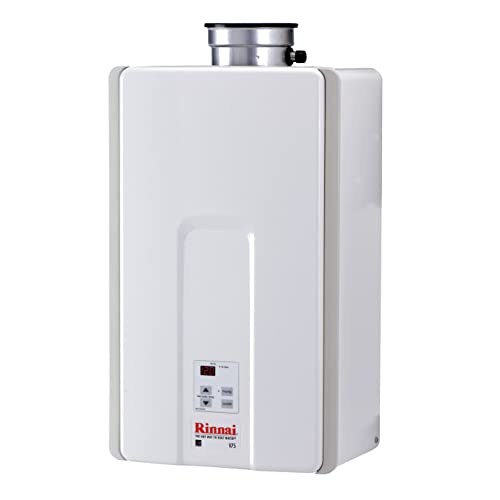
Best gas tankless water heater. Our rating: 5.0/5.0
Rinnai is the leading name in gas tankless heaters, and the V65iP covers a typical home.
Professional installation recommended.

Best high-efficiency gas heater. Our rating: 4.9/5.0
A condensing unit extracts more heat from the gas for lower running costs.
Premium.

Best Rheem gas heater. Our rating: 4.8/5.0
A Rheem gas unit for whole-home hot water.
Check venting requirements.
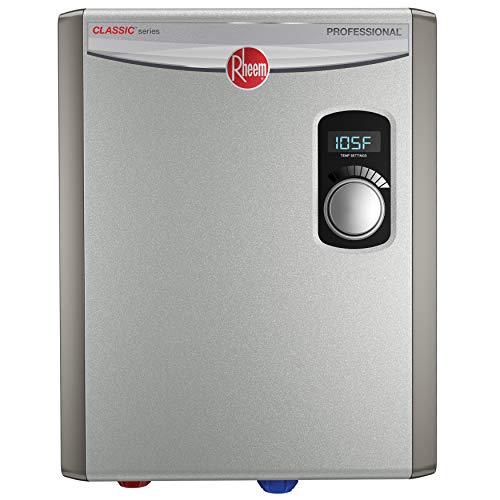
Best electric whole-home heater. Our rating: 4.7/5.0
A popular electric tankless for homes without gas.
Requires heavy electrical service.

Best premium electric heater. Our rating: 4.6/5.0
Stiebel Eltron’s Tempra keeps temperature steady as flow changes.
Pricier.
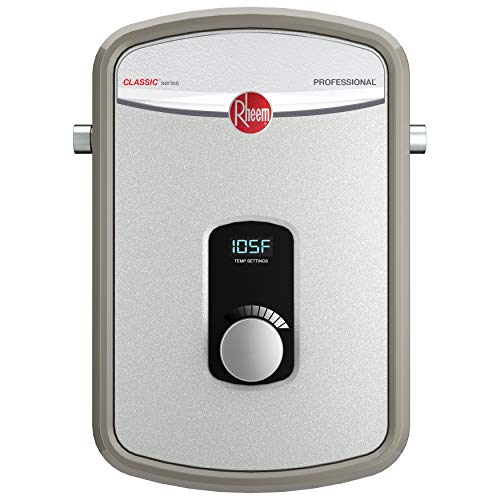
Best mid-size electric heater. Our rating: 4.5/5.0
A smaller electric unit for apartments or warmer climates.
Check flow needs.

Best compact electric heater. Our rating: 4.4/5.0
A compact EcoSmart for small homes.
Check amperage.
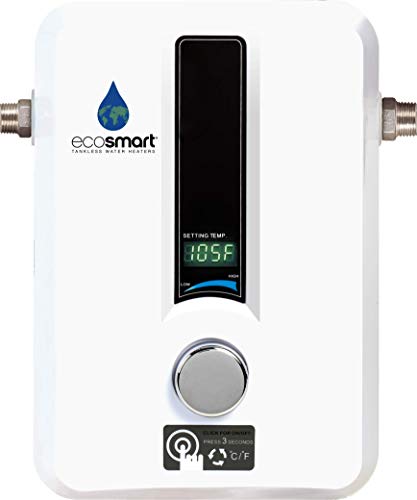
Best point-of-use heater. Our rating: 4.3/5.0
Hot water at a single sink or bathroom.
Not for whole-home use.

Best under-sink heater. Our rating: 4.2/5.0
A small unit for a single fixture.
Point of use only.

Best outdoor and RV heater. Our rating: 4.1/5.0
Hot water for cabins, camping and outdoor showers.
Outdoor use.
How to choose a tankless water heater
Flow rate
Add up fixtures used at once: a shower is about 2 GPM, a faucet about 1 GPM. Colder climates need a bigger temperature rise, which lowers the effective flow.
Gas or electric?
Gas units deliver more flow and suit colder climates but need venting and gas lines. Electric units are simpler but need large breakers and heavy wiring.
Installation
Most whole-home units need a licensed plumber, electrician or gas fitter, and permits.
FAQs
Do tankless water heaters save money?
They avoid standby losses, typically cutting water-heating energy use; savings depend on usage.
What size do I need?
Most homes need 6 to 9 GPM gas or 18 to 27 kW electric.
Can I install it myself?
Point-of-use units are simpler; whole-home units usually need professionals and permits.
How long do they last?
Often 20 years with descaling maintenance.
How we chose
We compared current heaters on flow, efficiency, fuel type, installation needs, the track record of the brand and how well established each model is with buyers on Amazon. Our ratings are our own editorial assessment of each model’s features and value. We did not rank on price, which changes often; the buttons above show the current price on Amazon.