
10 Best Bench Vises for Workshops and Garages (2026)
As an Amazon Associate, Engineer Warehouse earns from qualifying purchases. That does not change what you pay. Last updated on November 17, 2026
A good bench vise is the third hand every workshop needs: it holds parts for sawing, filing, drilling, bending, gluing and pressing bearings. A cheap one that flexes or slips makes every job harder.
Jaw width is the headline number, but throat depth, the casting material and the swivel lock matter just as much. Below are ten current vises, starting with the ones we would buy first.
Best all-round bench vise
- 4-1/2-inch jaws, 3-1/2-inch max opening
- 2-1/4-inch throat depth
- From Wilton, a vise maker since 1941
Best multipurpose vise
- Bench and pipe jaws in one
- Head rotates to put the second set of jaws on top
- Over 1,500 Amazon reviews
Best large vise for heavy work
- 8-inch jaws with anvil
- Swivel base
- Over a thousand Amazon reviews
Best mechanics vise
- 6-inch jaws
- Enclosed spindle keeps out grit
- Pipe jaws and 360-degree swivel
Best value combination vise
- 4-1/2-inch jaws
- Built-in pipe jaws
- Over a thousand Amazon reviews
Best vise with a rotating head
- 5-1/2-inch jaws
- 360-degree rotating head and base
- Pipe jaws
Best mid-size heavy-duty vise
- 5-inch jaws
- 360-degree swivel base and head
- Nearly 2,000 Amazon reviews
Best budget bench vise
- 4-1/2-inch jaws
- Multipurpose
- Over 1,600 Amazon reviews
Best budget 6-inch vise
- 6-inch jaws, 5.9-inch opening
- 360-degree swivel locking base
- About a thousand Amazon reviews
Best budget rotating vise
- 6-inch jaws
- Rotating base and head
- Bench mounted
The best bench vises, reviewed
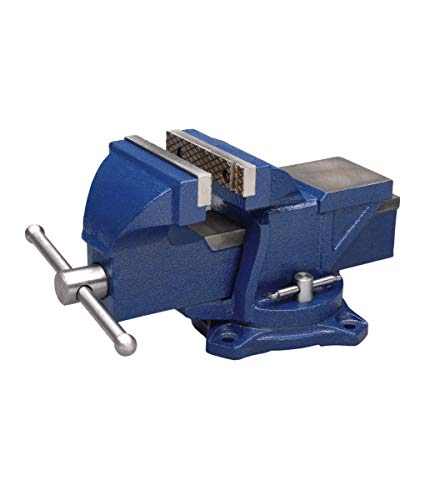
Best all-round bench vise. Our rating: 5.0/5.0
Wilton has made vises since 1941 and its name is a standard in machine shops. This general-purpose model is the right size for most home workshops and garages, with a smooth screw and solid jaws.
It suits mechanical repair, light metalwork and woodworking without taking over the bench.

Best multipurpose vise. Our rating: 4.9/5.0
Yost’s 750-E rotates to swap between flat bench jaws and pipe jaws, which saves owning two vises.
It is a popular choice for plumbers, mechanics and general garages.

Best large vise for heavy work. Our rating: 4.8/5.0
For heavy fabrication, bending and hammering, the 8-inch Forward CR80A has the jaw size and mass to stay put.
Mount it to a solid steel or heavy timber bench with large bolts.

Best mechanics vise. Our rating: 4.7/5.0
The enclosed spindle protects the screw from dirt and filings, which keeps the vise working smoothly for years.
A strong choice for auto shops and maintenance work.

Best value combination vise. Our rating: 4.6/5.0
A smaller, inexpensive Yost with pipe jaws under the main jaws.
A good first vise for a home garage.
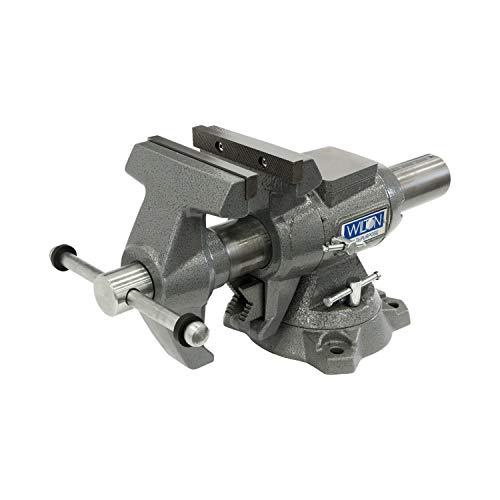
Best vise with a rotating head. Our rating: 4.5/5.0
Rotating both head and base lets you angle work exactly where you need it.
Useful for welding and fabrication where you need awkward angles.
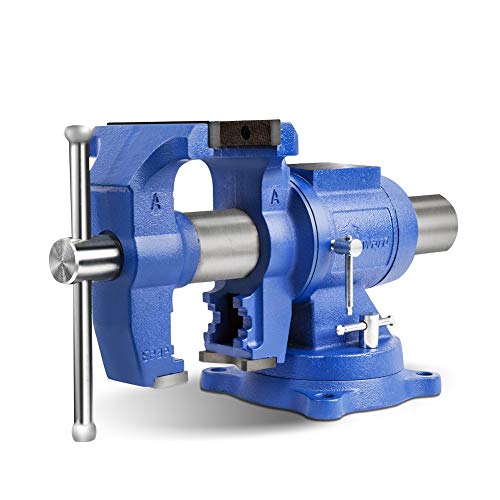
Best mid-size heavy-duty vise. Our rating: 4.4/5.0
A well-reviewed 5-inch vise with both base and head swivels.
A good middle ground between light and heavy-duty vises.

Best budget bench vise. Our rating: 4.3/5.0
An inexpensive vise for occasional household and hobby use.
Choose a Wilton or Yost for daily heavy work.

Best budget 6-inch vise. Our rating: 4.2/5.0
VEVOR’s 6-inch vise gives you larger jaws for little money.
Good for a garage where you occasionally need more capacity.

Best budget rotating vise. Our rating: 4.1/5.0
An affordable vise with a rotating head for angled work.
Check the mounting footprint against your bench before ordering.
How to choose a bench vise
Jaw width
4 to 5 inches suits most home workshops; 6 to 8 inches is for heavy fabrication and large parts.
Throat depth and opening
Throat depth is how far down the jaws grip; opening is the widest part you can hold. Both matter as much as jaw width.
Material
Ductile iron and forged steel resist cracking under heavy use better than cheap grey cast iron.
Swivel and pipe jaws
A locking swivel base lets you angle the work. Pipe jaws hold round stock without crushing it.
Mounting
Bolt the vise through a solid bench with large washers or a backing plate, with the fixed jaw just past the bench edge so long parts can hang down.
FAQs
What size bench vise do I need?
For most home garages, a 4 to 5-inch vise. Choose 6 inches or more for heavy metalwork.
Should I use soft jaws?
Yes for finished or soft parts. Aluminum, plastic or wood jaw covers protect the work from the serrated jaws.
Can I hammer on a bench vise?
Light work on the anvil is fine; heavy hammering belongs on a proper anvil to avoid cracking the casting.
Woodworking vise or bench vise?
A woodworking vise mounts flush under the bench with wide wooden jaws. A machinist’s bench vise sits on top and is for metal.
How we chose
We compared current vises on jaw size, throat depth, materials and features, the track record of the brand and how well established each model is with buyers on Amazon. Our ratings are our own editorial assessment of each model’s features and value. We did not rank on price, which changes often; the buttons above show the current price on Amazon.